
Next-Gen Volvo EX40 Could Be a Smaller EX60. But Will It Even Come to the US?


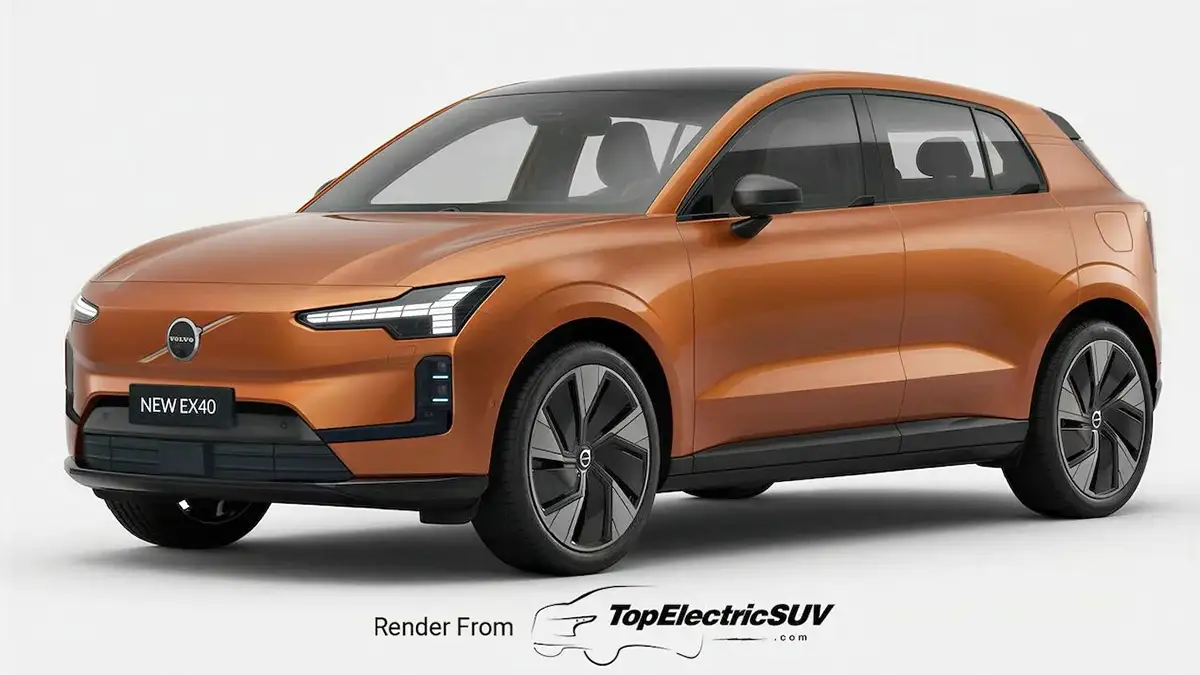
This is something that is pretty easy to guess. Of course, Volvo will come up with a replacement for the current Volvo EX40. The illustration above shows what it could look like. Which is exactly like a smaller Volvo EX60. And honestly, that’s been Volvo’s recent design strategy anyway: scaling the same clean, minimalist look across multiple sizes, while refining details like lighting signatures and proportions.
The current EX40 is the electric version of the Volvo XC40, which came out almost 10 years ago in 2017. Although the concept version was introduced a year earlier. All I can say is that the design aged pretty well, as it still seems pretty modern after all these years. In fact, it arguably holds up better than many competitors from the same era, thanks to its simple surfaces and lack of gimmicky styling trends. Both models are still on sale in the US, with the XC40 starting at around $41,300. Volvo charges a crazy $15,000 to get into the EX40 EV. Or about $16,000 more than the newer (and already canceled in the US) Volvo EX30, which was supposed to be the brand’s real entry-level EV.
While the all-new larger EX60 is still planned for the US, who knows about the next-generation EX40? The new EX60 with standard AWD is rumored to start at around $60,000 in the US. That would leave plenty of room for something a bit smaller and a lot cheaper. Something like a new EX40. It would also give Volvo a much-needed competitor in the crowded compact EV segment, where pricing and range are improving rapidly. However, Volvo would not be able to afford the new US tariffs. Something that killed the EX30 over here, at least for now. These trade barriers are quickly becoming one of the biggest deciding factors in what cars Americans actually get to buy.
The new EX40 could only come here if built in the US. That would mean rethinking production strategy, possibly expanding local manufacturing capacity, and committing to higher volumes. Without that, even a perfectly designed next-generation model might never reach American showrooms.
Who knows…