
2027 Hyundai Elantra interior.


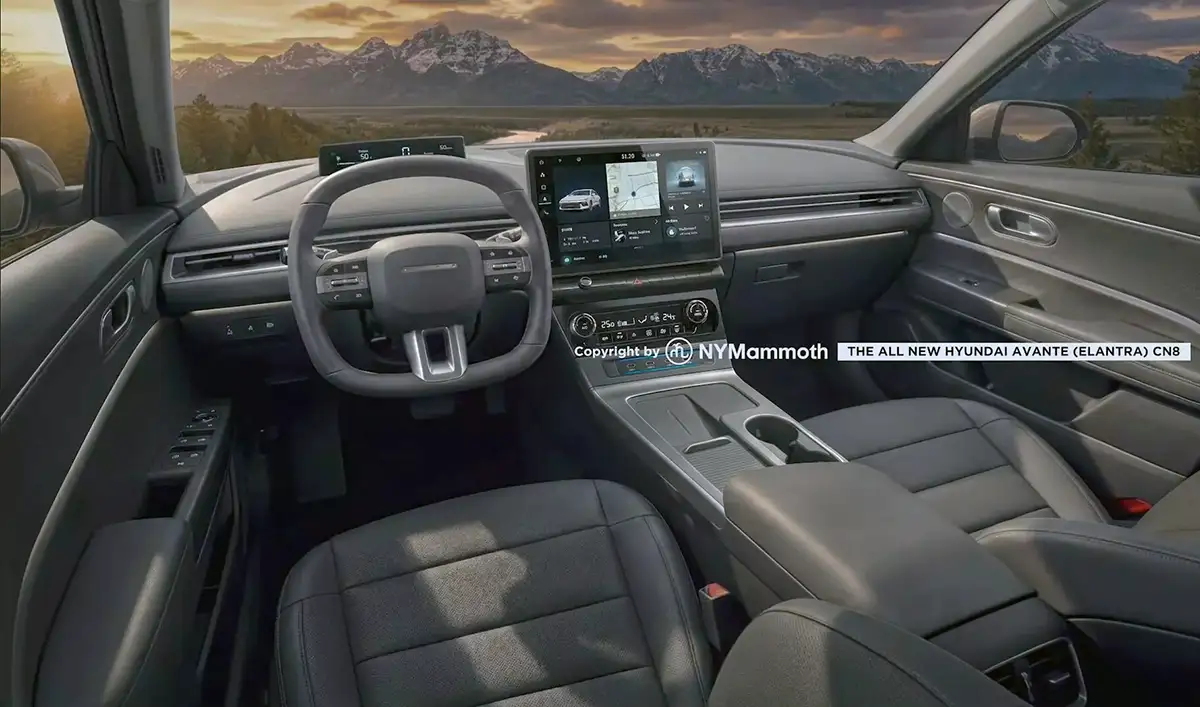
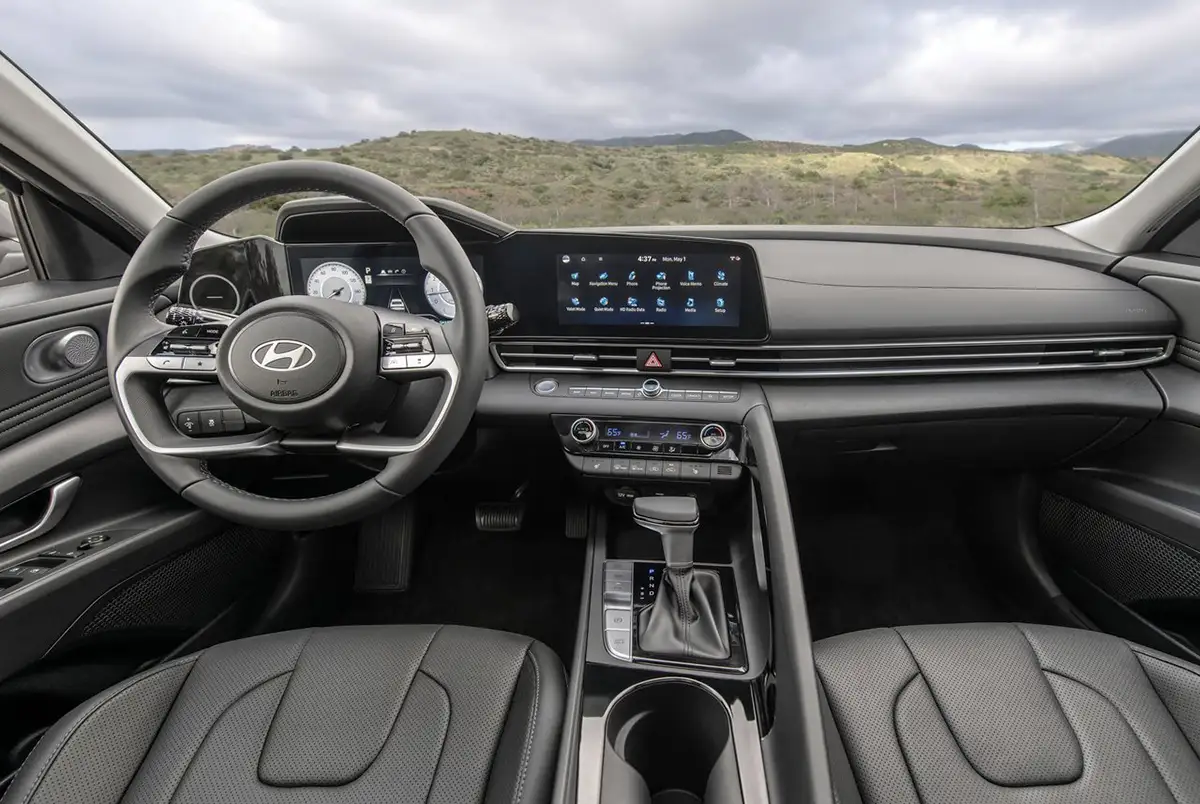
The illustration above shows what the next-generation Hyundai Elantra could look inside. A completely new design that will use Hyundai’s new interior design language. One that uses a big display on top of the center console. And a much smaller thin one in front of the driver. As previewed last year.
The ll-new Ioniq 3 will also soon feature this set up. However, the images we have seen usually show a large floating screen above the console. While the illustration above shows a pretty well integrated unit. That new set up will also include a row of physical buttons under the screen, which is a nice touch.
However, when you compare the predicted 2027 interior with th ecurrent set up, things don’t really look much better of more modern. As the current Elantra interior is still in my uninformed and unprofessional opinion, better than most f its competition.
Hyundai is reportedly accelerating the launch of the next-generation Elantra, pushing its debut forward for next month, instead of the originally planned September reveal. That alone signals something big is happening behind the scenes.
The current Elantra, introduced in 2020, already received a mid-cycle refresh just two years ago. That update sharpened its futuristic edge, making this rumored redesign feel even more surprising. Reports suggest Hyundai is pivoting toward a retro-futuristic design language, potentially drawing inspiration from earlier Elantra generations. We have already seen prototypes with a flatter roofline, more upright A-pillars, and cleaner surfacing seem to support that theory.
There’s also growing speculation that this new Elantra could play a much larger role in Hyundai’s shrinking internal combustion sedan lineup. With the Sonata widely expected to exit the U.S. market and no direct replacement planned, the next Elantra may grow in size and positioning to fill that void. If that happens, it wouldn’t just be another redesign, it could become Hyundai’s final gasoline-powered sedan in America. That possibility gives this generation symbolic weight as the brand accelerates toward an all-electric future.
Despite the dramatic design shift, the next Elantra is expected to ride on an updated version of the current platform. That aligns with a broader industry trend: automakers are increasingly preserving development budgets for EV architectures rather than investing heavily in new ICE platforms for models with limited lifespans.
Looking ahead, the Elantra could transition to a hybrid-only lineup by 2027, potentially adding a plug-in hybrid variant. Meanwhile, key rivals like the upcoming Honda Civic and Toyota Corolla are also evolving rapidly, with electrified powertrains expected to become more prominent across the compact sedan segment. However, the latest rumors suggest Hyundai may initially carry over the current engine options before making a full shift toward electrification.
Over the years, the Elantra has grown into one of the boldest-looking compact sedans on the market. Some enthusiasts worry that a retro-inspired direction could undo that hard-earned progress, especially since earlier generations were never considered design standouts. On the other hand, Hyundai has proven it knows how to reinterpret heritage themes in fresh, modern ways.
If this truly is the beginning of the Elantra’s final ICE chapter, Hyundai may be preparing to make a statement. Whether it becomes the most exciting Elantra ever built, or the most polarizing, one thing seems certain: this next generation will do its best to stand out.