
New Nissan Leaf road test.


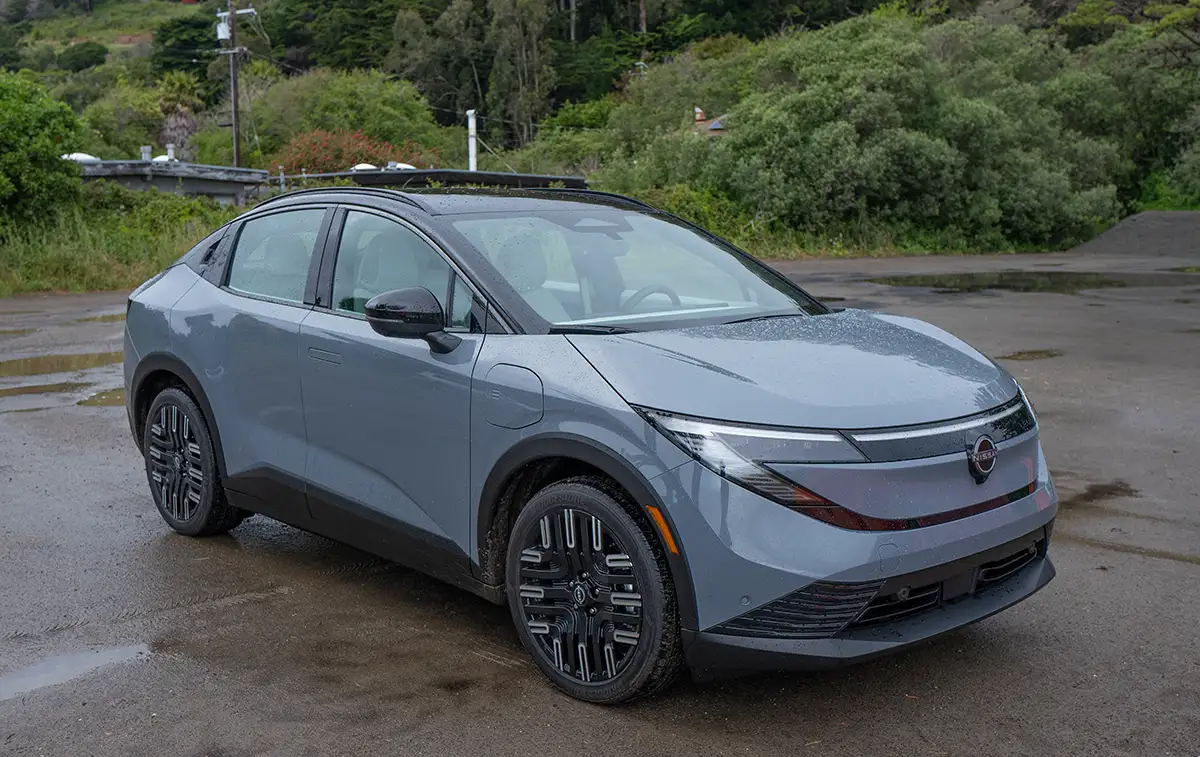
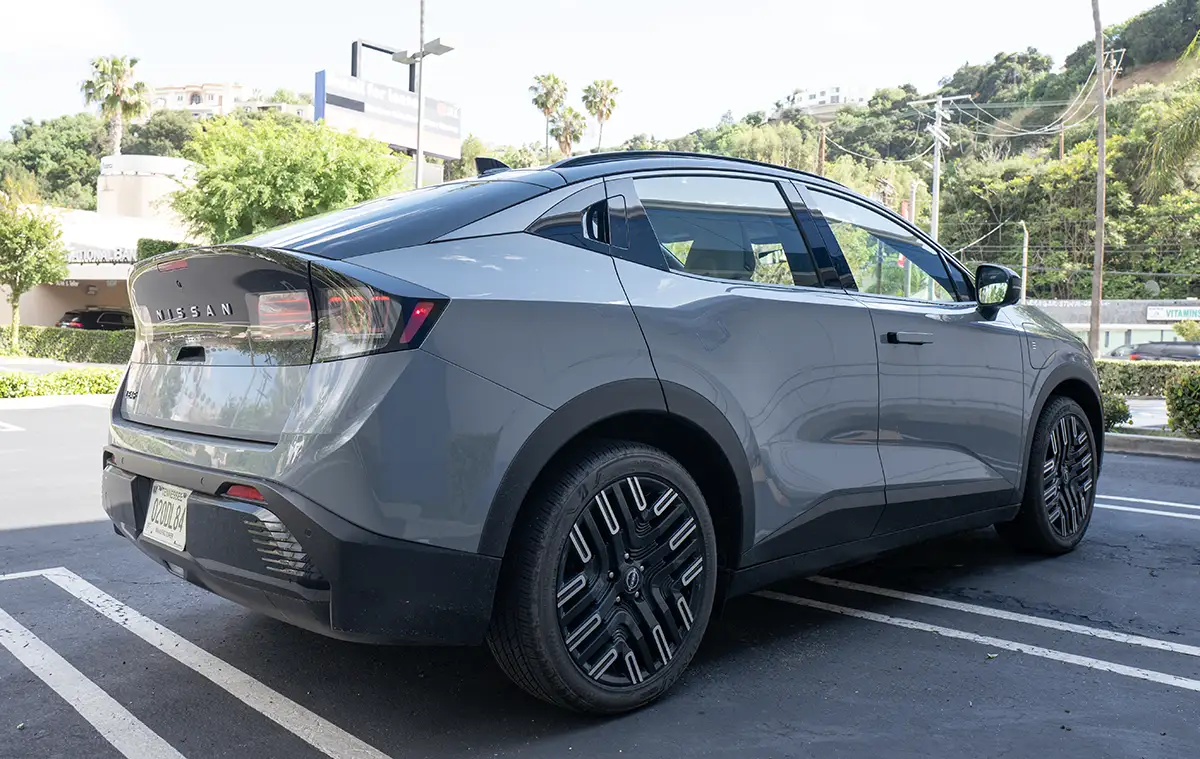
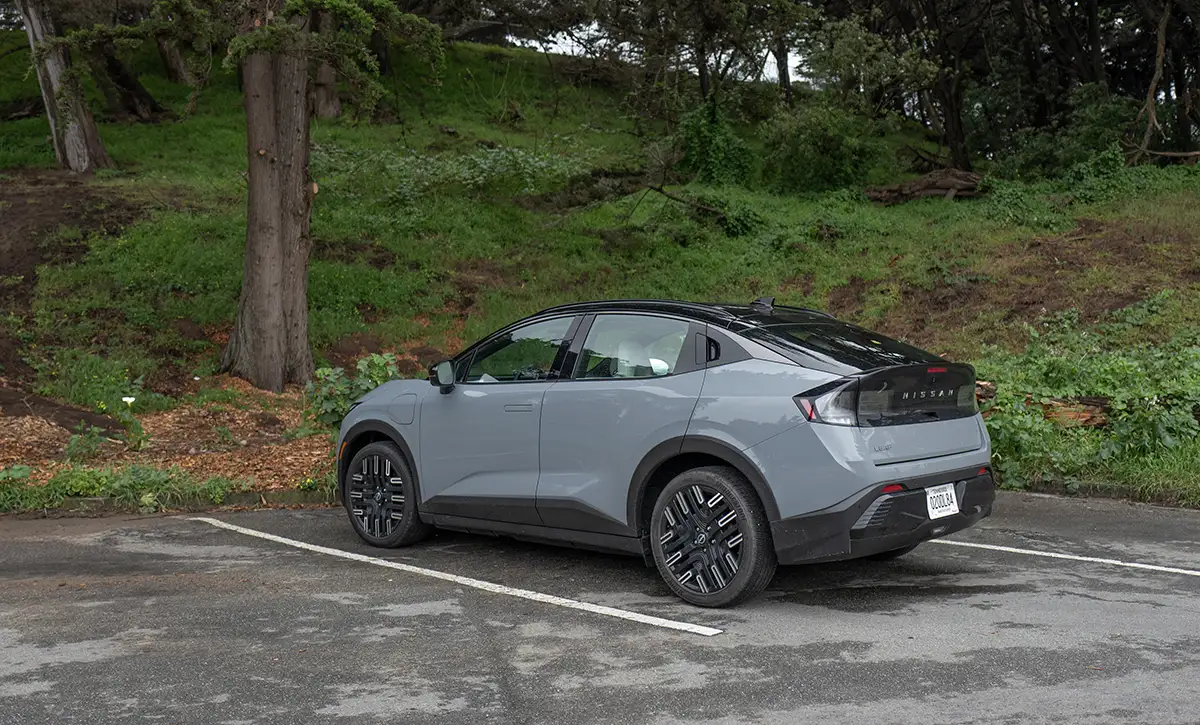
The Nissan Leaf is all-new for 2026, and it shows. It is such a vast improvement over the previous generation.
Visually, it’s finally a very modern-looking car. Unlike the second generation, it truly looks all-new. It also has a friendly, non-aggressive design, which is very refreshing these days.
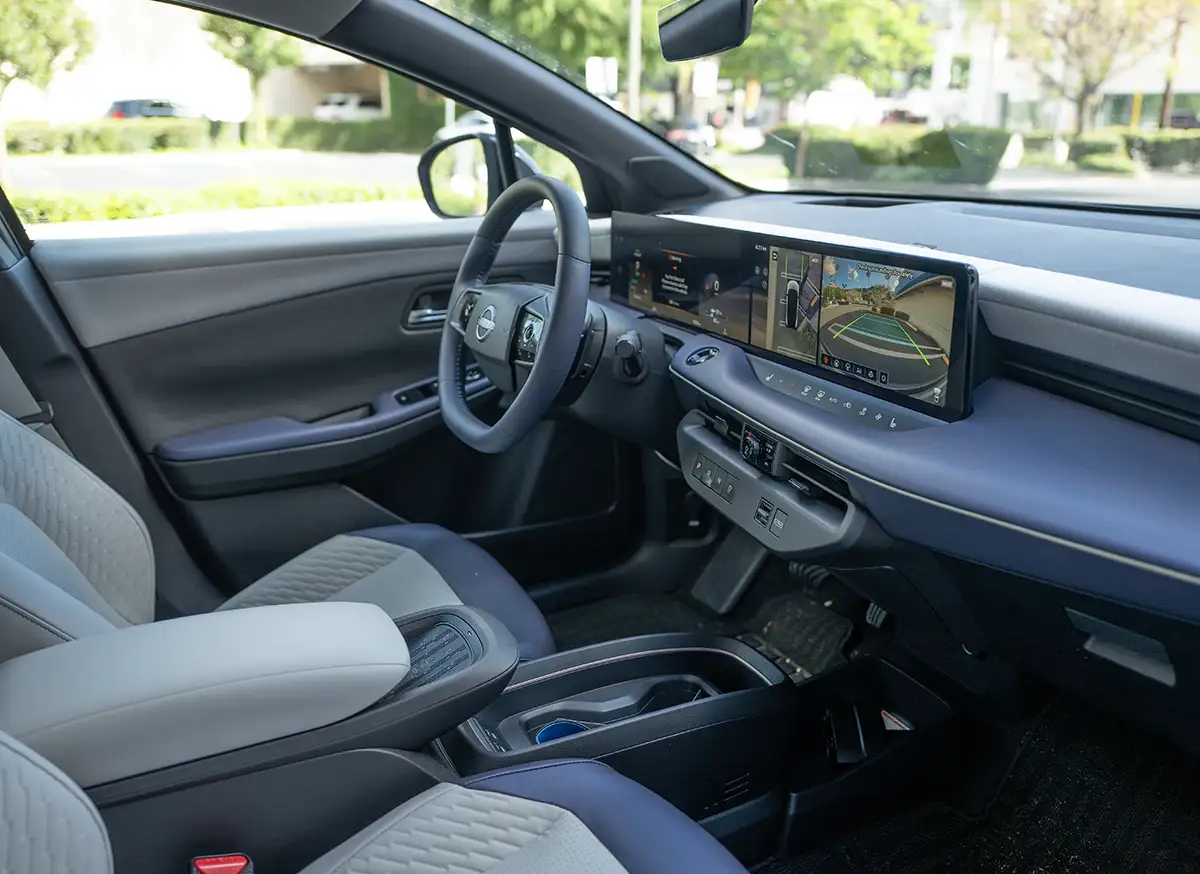
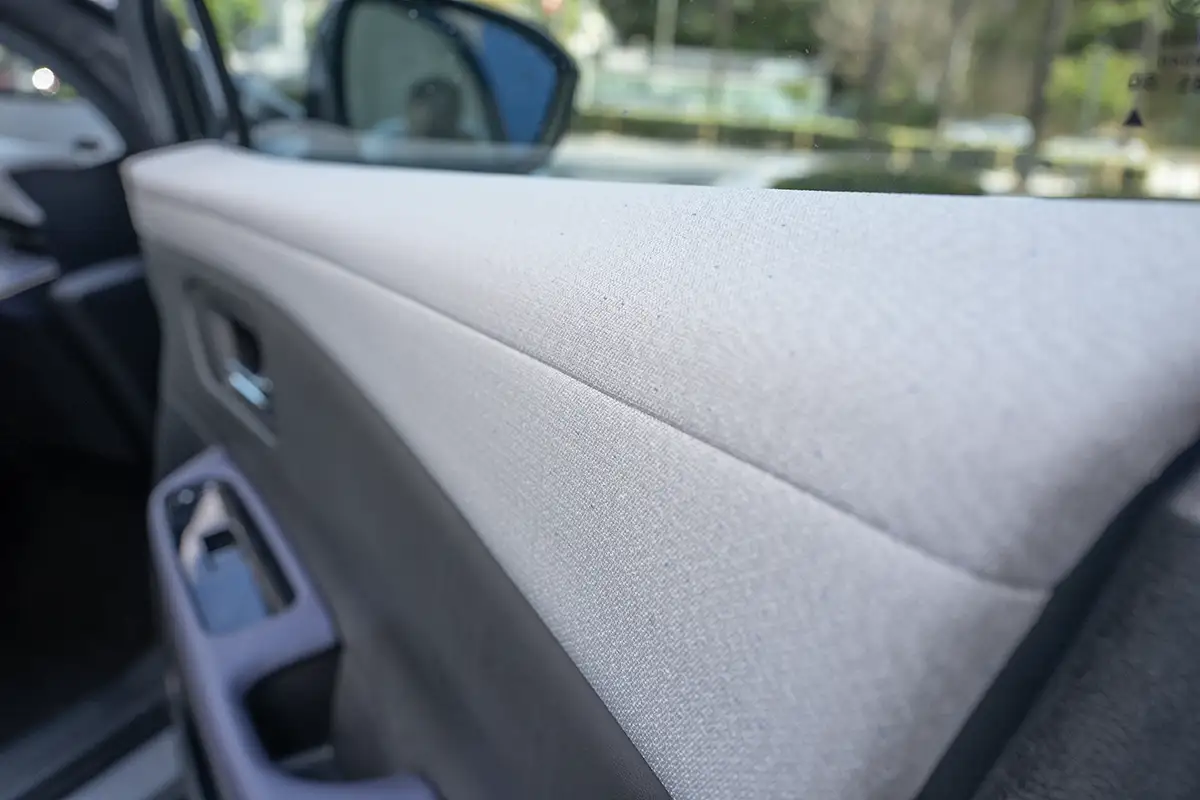
Inside, Nissan has done a great job creating a modern, clean and simple interior.
However, most of the plastics are quite hard to the touch, which is expected for an “affordable EV.”
In my unprofessional opinion, the worst part is the large plastic module under the dashboard. It looks and feels really cheap, almost like a last-minute addition, and clashes with the otherwise tasteful interior (aside from the slightly odd gold trim).
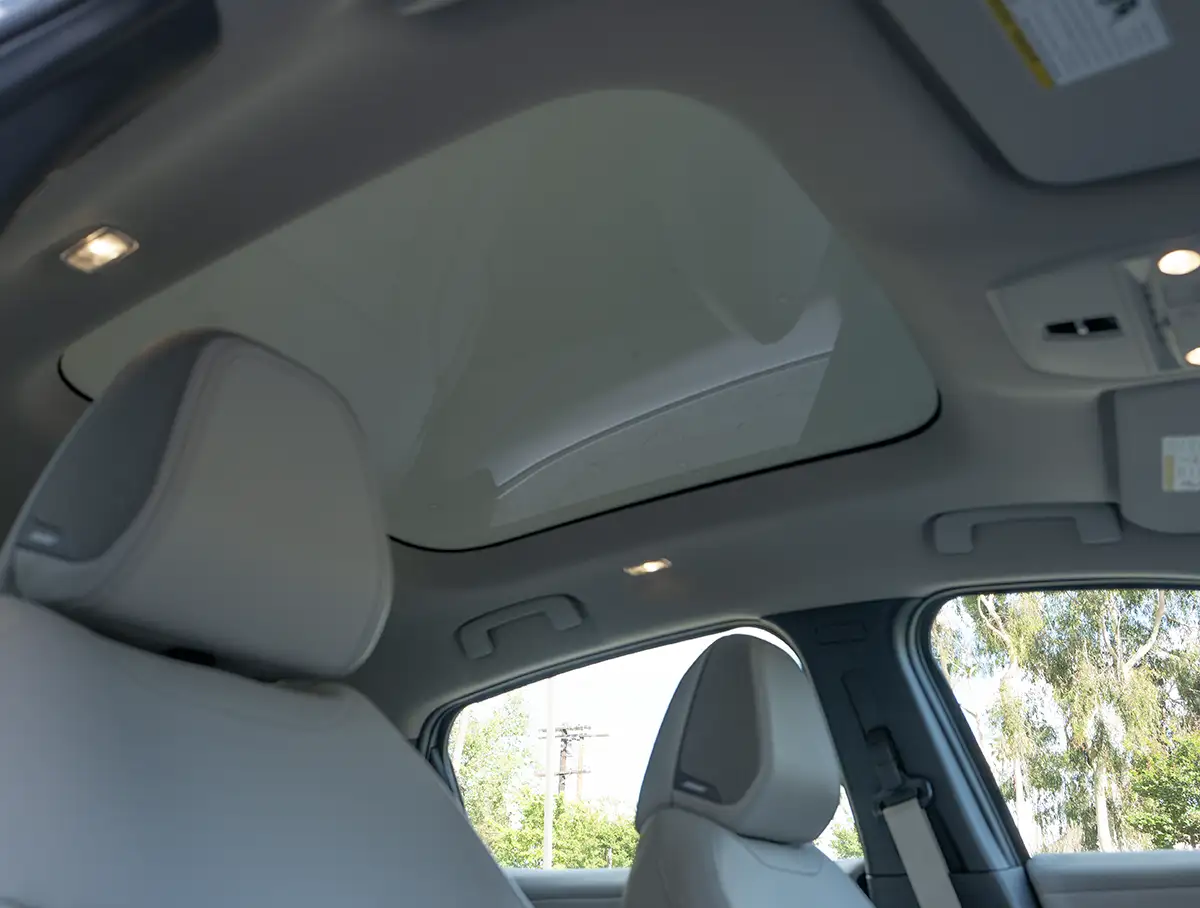
The loaded Platinum Plus trim I drove included a dimming panoramic roof. It’s a very cool technology, but even in its most opaque setting, it doesn’t block all the light and heat.
A traditional powered sunshade is still a better solution. Also, the glass panel starts behind the front passengers’ heads, so it’s really only useful for rear passengers.
The Bose sound system sounded great. And map info comes out of the headrest speakers. A great idea. However, one that didn’t work every time…
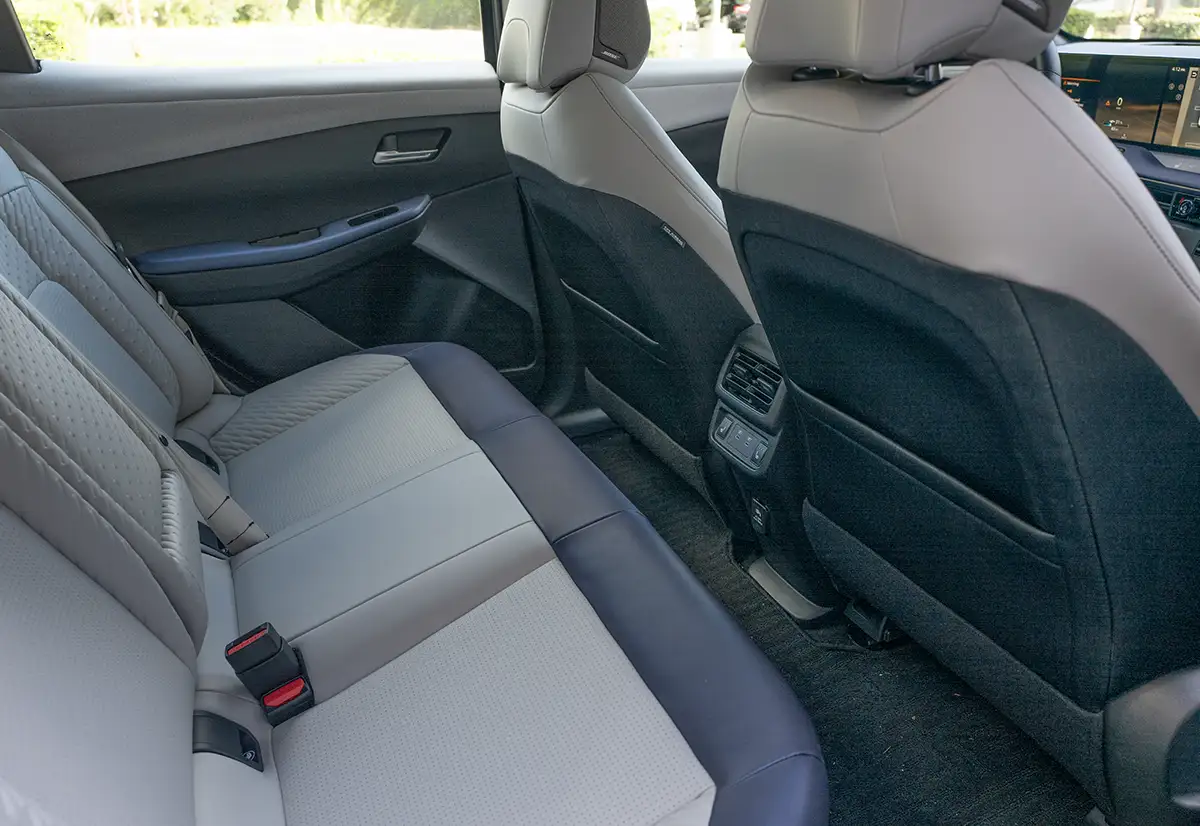
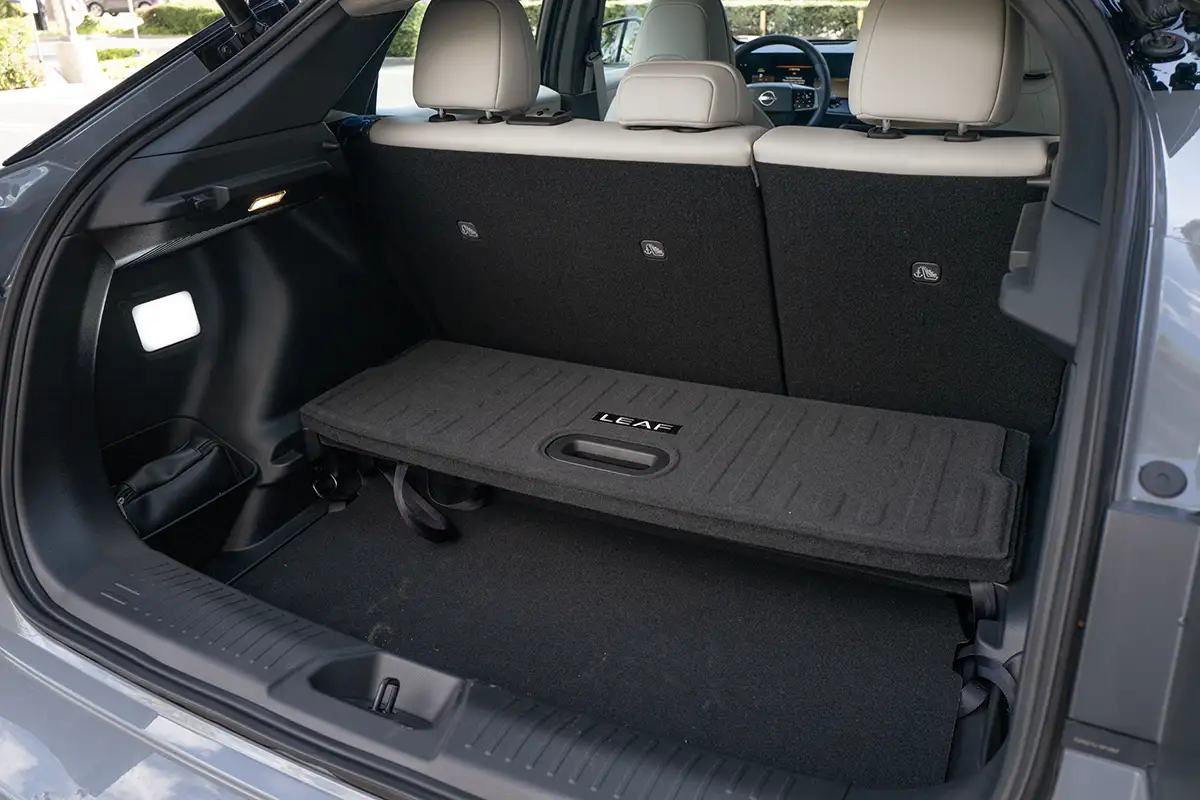
The rear seat isn’t particularly roomy, which is a bit surprising for an EV. However, there is plenty of space under the rear hatch, and the rear seats fold flat for added practicality. Or even a well-deserved nap.
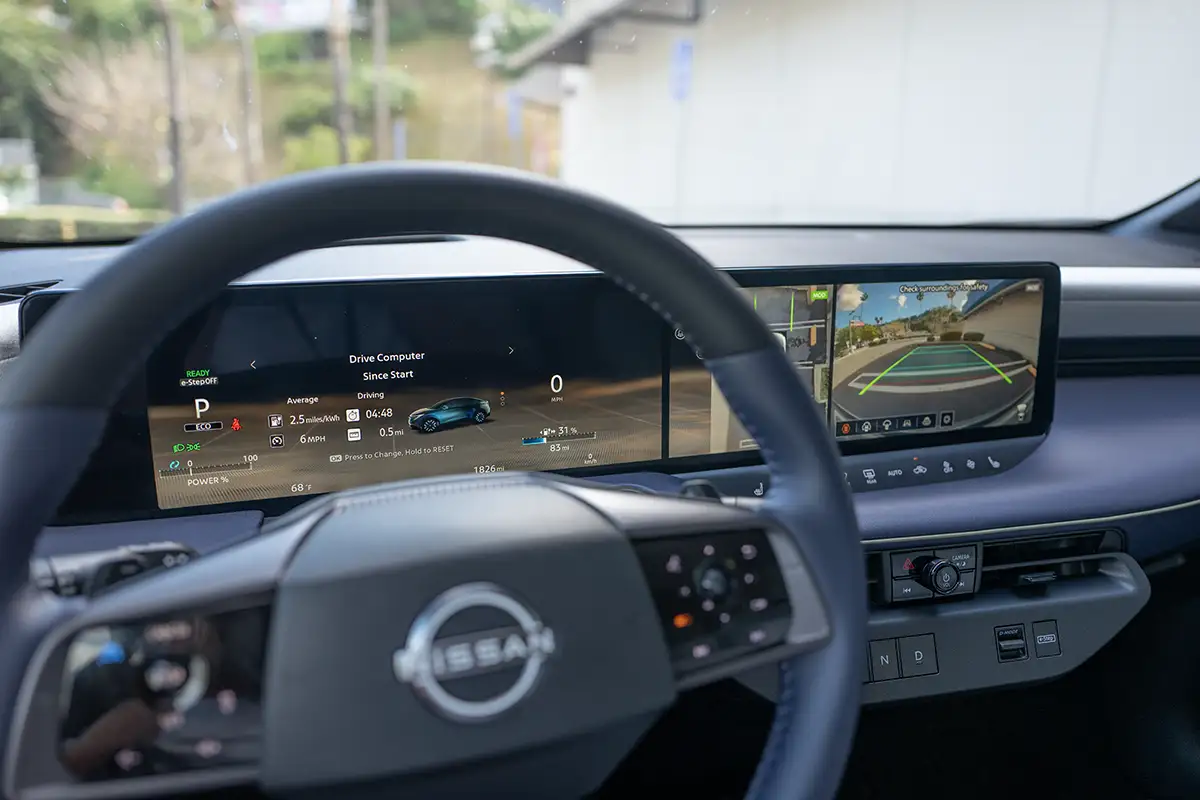
The suspension is surprisingly firm and can even be quite harsh at times. This stood out, especially when compared to something like the Hyundai Ioniq 5. It’s also noticeably less quiet than the Hyundai, especially at freeway speed. Road noise on the freeway can become quite intrusive, and there’s also some wind noise.
The Nissan Leaf also lack true one pedal driving. Which to me is a must have in an EV.
The steering is very light at all times, though it improves slightly in Sport mode. There’s also some torque steer when you push the car in Sport mode, which I guess is expected given the instant torque in a relatively inexpensive front-wheel-drive EV.
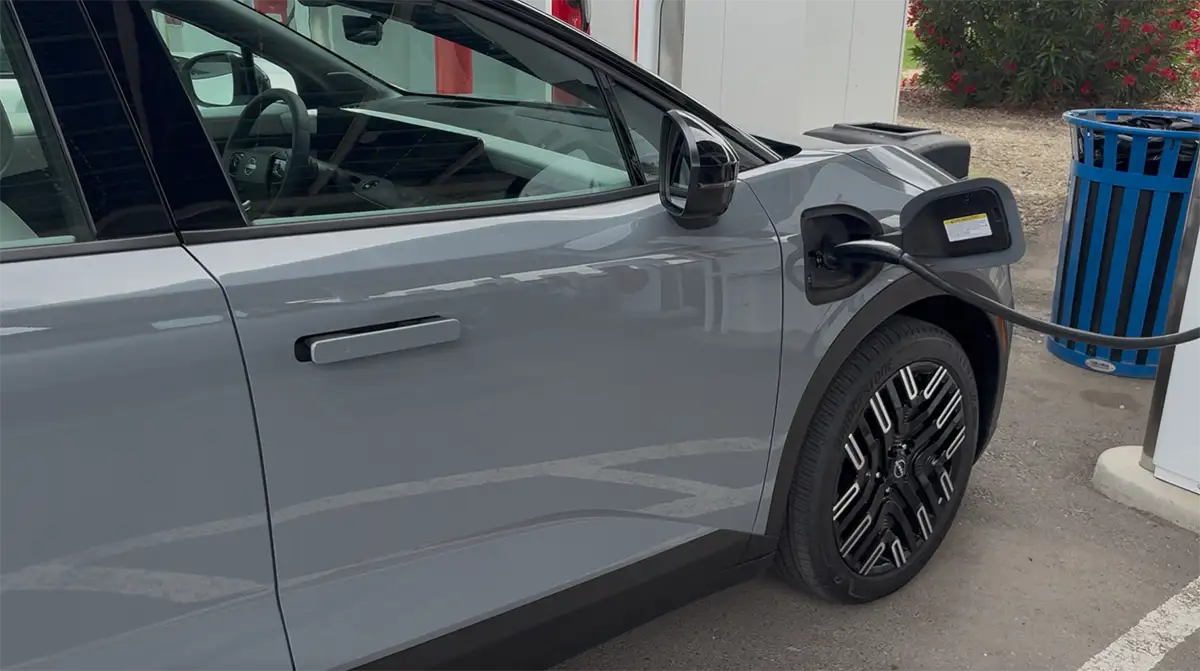
While Tesla allows non-Tesla vehicles to use its network, their cables are extremely short since they were originally designed for Tesla vehicles. The Leaf has its charging port on the front passenger side, which works fine. But only if you park very, very close to the charger. Other EVs with ports in different locations aren’t as lucky and may end up taking two spots, which can lead to some frustrated Tesla drivers. And maybe violent “Charger Brawls” we hear so much about in the news these days.
I also tried a non-Tesla charger. ( I forgot what brand…). The first plug didn’t work, but the second one was fine, and actually a bit faster than the Tesla chargers. It was also much cheaper than Tesla’s very high pricing for non-subscribers. Even at Tesla’s higher rates, though, the cost ended up being comparable to a gas car getting around 50 MPG, which is still quite efficient.
I really enjoyed my week with the new Nissan Leaf. However, I think the Platinum Plus trim, at over $42,000, is a bit expensive. That’s only a few thousand dollars less than a fully loaded Hyundai Ioniq 5 Limited, which is roomier, more luxurious, quieter, and more comfortable. It also offers up to 318 miles of range, compared to the Leaf’s 259 miles with larger wheels.
The Leaf’s main competition might actually be slightly used EVs. If a new, fully loaded Kia EV6, Ioniq 5, or Mustang Mach-E costs $4,000–$5,000 more, lightly used versions of those cars are significantly cheaper than a new Leaf. And arguably much better overall.
The best deal is really the more basic version, starting around $30,000, which offers over 300 miles of range. At that price point, the car’s shortcomings are much easier to accept.
I really hope the new Leaf sells well. As it stands, it’s much more fun to drive than something like a Honda Civic Hybrid or a Toyota Corolla—for not that much more money.